Offshore Yacht Camping & Archipelago Island Basecamp Operations

A comprehensive operational doctrine on anchoring luxury expedition catamarans in deep waters while maintaining an autonomous high-comfort shore basecamp using floating umbilical power links.

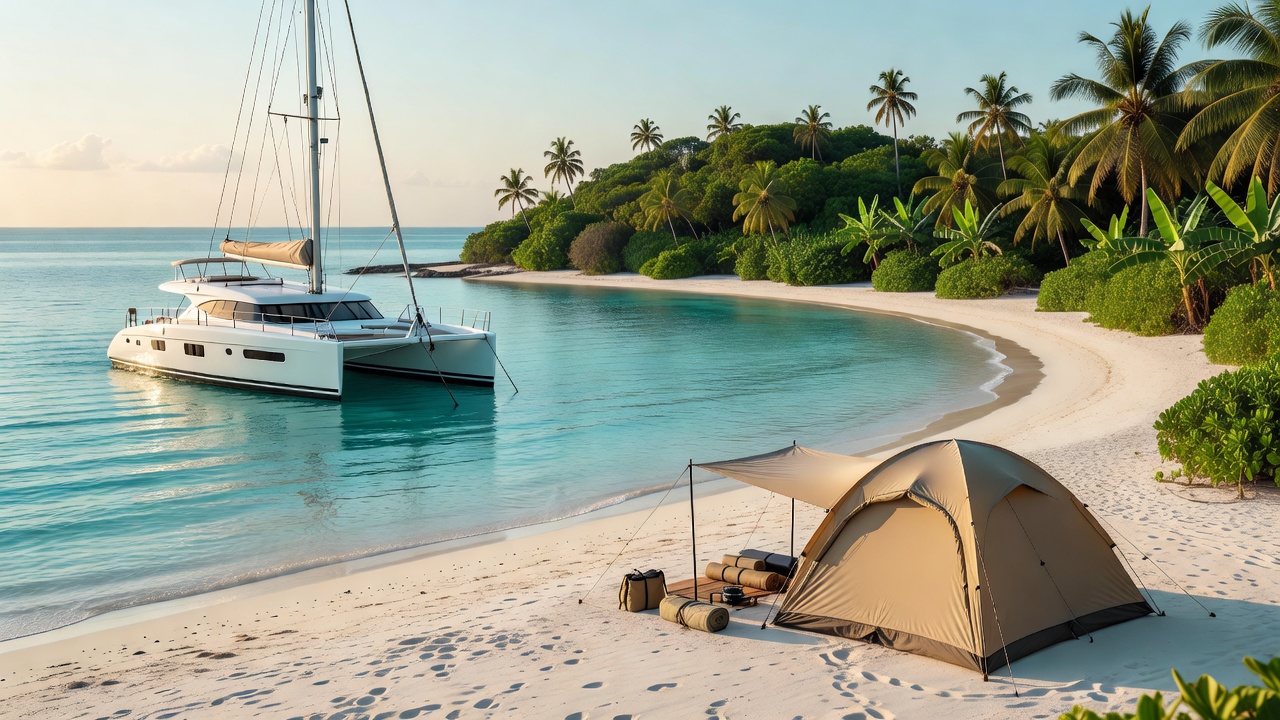
Offshore camping yacht anchored near uninhabited tropical island with beach tent setup

Combining deep-water yachting with island camping presents a unique logistical challenge: how to deliver true off-grid luxury onto land without disturbing fragile coastal ecosystems or relying on heavy carbon-emitting generators.

1. Scouting & Tidal Anchorage Analysis

Prior to landing basecamp modules, the expedition captain must execute a seabed survey using the vessel's multi-beam sonar. Optimal shore camps require a combination of a shallow tender slip and an anchored mother vessel positioned within 150 meters of the high-tide line.

  • Bottom Holding: Seek fine sand or clay bottoms for primary Rocna anchors. Avoid live coral heads or protected seagrass beds.
  • Tidal Window: Plan tender landings precisely during mid-rising tide to prevent grounding heavily loaded gear RIBs.
  • Wind & Swell Protection: Ensure the shoreline provides at least 270 degrees of wind protection.
TECHNICAL PROTOCOL: UMBILICAL POWER LINK
Sortsycompss vessel class Aurora 48 is equipped with a 200m floating 240V DC power tether. When connected from the yacht's 180 kWh battery bank to the CMP-POWER-88 shore hub, the land camp gains continuous 3000W AC power with zero noise pollution.

2. Shore Basecamp Erection & Modular Setup

Using pneumatic high-pressure air-beam shelters (CMP-TENT-44), a fully habitable basecamp can be erected on beach terrain within 15 minutes. The structures are anchored using heavy sand-auger stakes rather than invasive ground spikes.

Fresh water supply is maintained via quick-connect food-grade polyurethane hoses running from the yacht's reverse osmosis watermaker. This eliminates the need to haul heavy water jerrycans across the surf line.

3. Environmental & Waste Containment Standards

In compliance with strict international marine sanctuary rules, all land basecamps operated under the Sortsycompss standard must leave zero trace. All graywater and solid waste are transferred back to the mother vessel's vacuum waste treatment systems prior to weighing anchor.
Managing Off-Grid Solar & Battery Banks at Sea

Sustaining continuous high-amperage power for shore camping equipment, induction cooking, and continuous reverse osmosis watermakers without running diesel auxiliary generators.

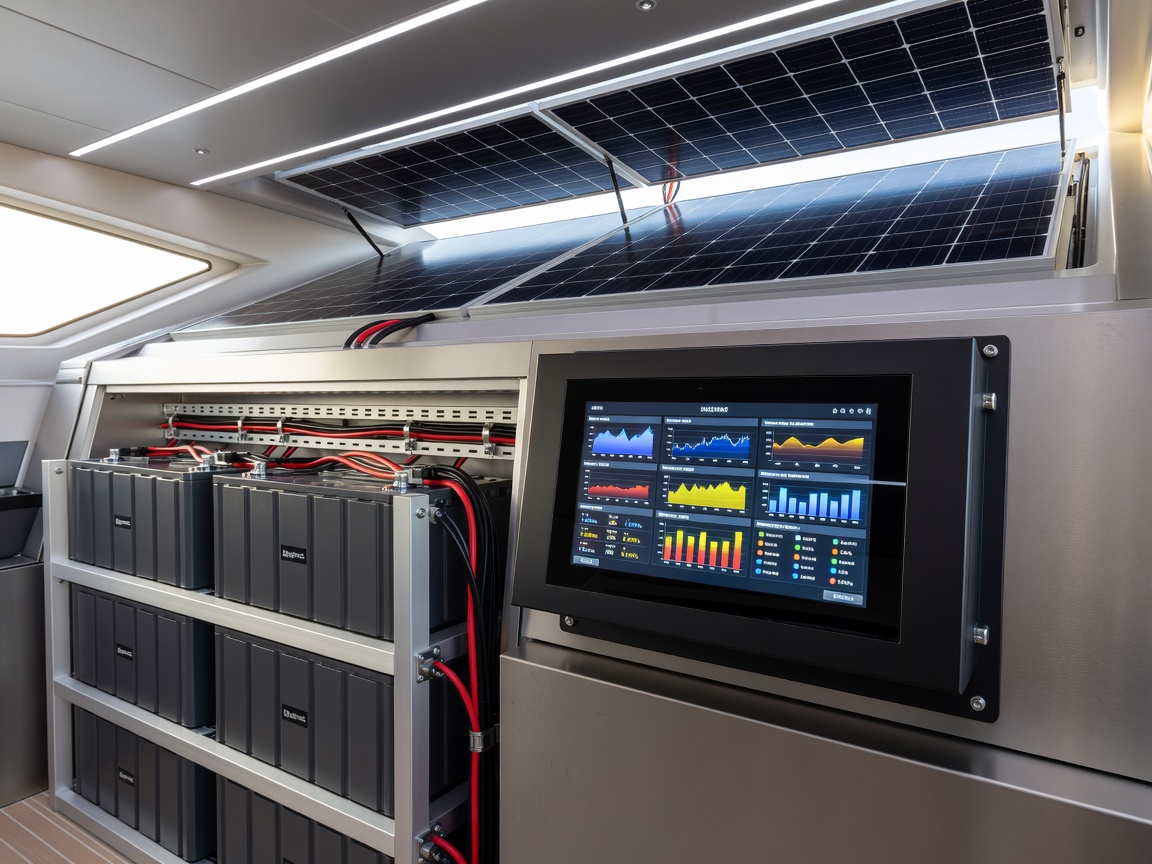
Yacht electrical solar battery array telemetry unit showing real-time power metrics

In remote marine environments, silence and self-reliance are paramount. Traditional expedition yachts rely heavily on diesel generators to keep refrigeration, watermakers, and shore basecamps running. Sortsycompss clean energy telemetry architectures eliminate generator run-time completely through CIGS flexible arrays and lithium iron phosphate (LiFePO4) storage management.

1. Daily Energy Balance Calculation

A typical expedition basecamp operating off the mother vessel demands approximately 18 kWh to 24 kWh per 24-hour cycle. Understanding power generation versus load curves is essential for remote safety.

  • Solar Harvest (Roof Canopy 8.4 kW): Generates 38 to 46 kWh/day in tropical zones under standard sun hours.
  • Desalination Load (450W @ 24V): 5.4 kWh for 12 hours of production (1,440 Liters fresh water).
  • Basecamp Umbilical Load: 8 kWh for climate control, induction cooking, and satellite comms hub.
  • Net Energy Reserve Surplus: +18.6 kWh daily surplus fed into central 180 kWh LFP bank.
ENGINEERING RULE: MPPT TRACKING & SALT SPRAY PROTECTION
Marine solar arrays experience rapid voltage fluctuations due to wave shadows and sail shading. Quad-channel SmartSolar MPPT controllers adjust duty cycles 1,000 times per second to maintain 98.2% harvesting efficiency across all sea conditions.

2. Battery Thermal Management & Depth of Discharge

To guarantee 6,000+ cycle lifetimes, LiFePO4 cells are maintained between 18°C and 28°C using integrated hull heat-exchanger cooling channels. Depth of Discharge (DoD) is software-capped at 80%, leaving a emergency reserve buffer for navigation electronics and bilge pump operations.

3. Emergency DC-to-DC Shore Interconnect

In case of prolonged tropical storms, portable 15kWh LiFePO4 battery hubs (CMP-POWER-88) can be hot-swapped onto the tender deck and charged via the yacht's secondary high-output engine alternators at 150 Amps in under 45 minutes.